How do you choose a tattoo design in the first place?
Hi, I'm Yeonjae, a tattoo artist in Hongdae, Seoul. If you are wondering how to choose a tattoo design, the short answer is to decide three things together: how thick the lines are, how large the piece is, and where on the body it will sit. These three choices shape one another, so it helps to settle them as a set rather than one at a time.
Most people start with an image or an idea, such as a flower, an object, or a few words. That is a good starting point, but the idea only becomes a tattoo once it has a line weight, a size, and a place to live. A motif with many small parts needs different handling from a single bold shape.
In this article I use a Korean norigae and mugunghwa (Rose of Sharon) piece as the worked example. We will look at how the case was described, what the photos show about line and placement, and how you can turn those observations into your own decisions. Everything about the case comes from the original Instagram caption and the photos, so I will not guess at details that are not there.
How did the norigae and mugunghwa tattoo come together?
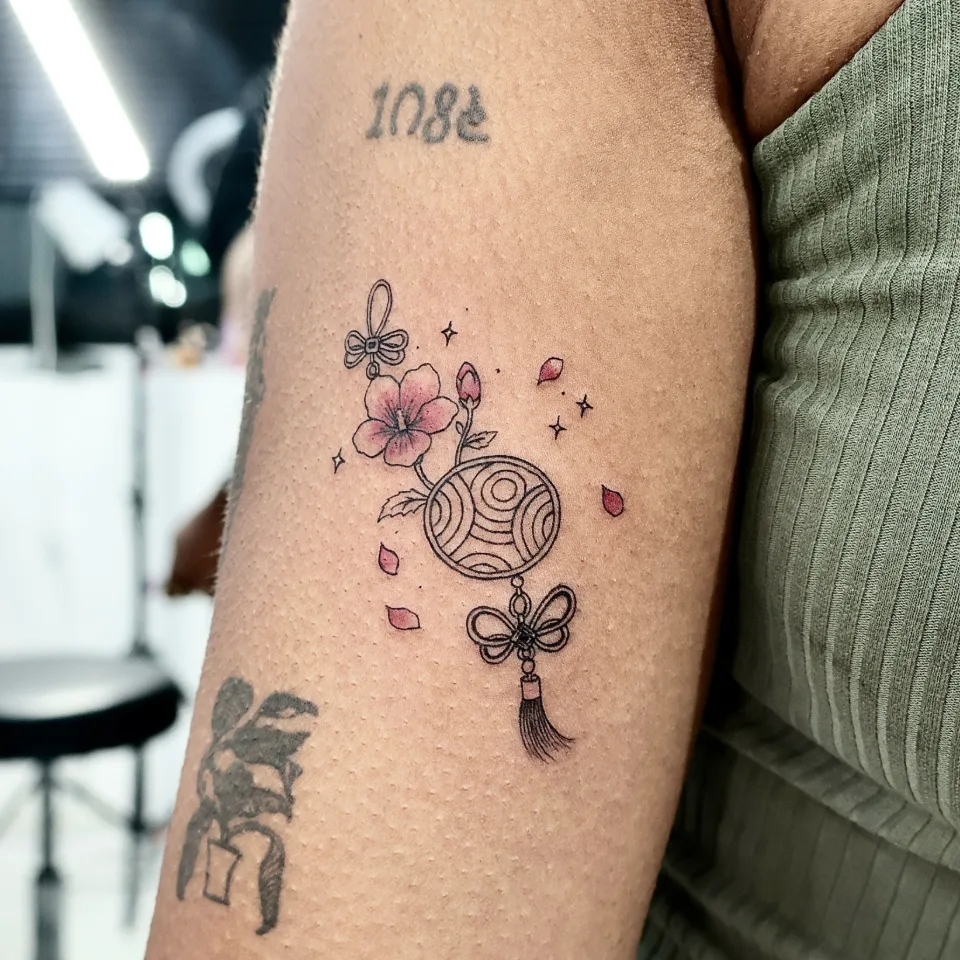
The caption describes the piece as a custom tattoo inspired by the traditional Korean norigae, an ornamental accessory, and by Korea's national flower, the mugunghwa. The elegant silhouette of the norigae is paired with a blooming mugunghwa. The caption says the pairing stands for resilience, beauty, and the enduring spirit of Korea.
The colors and details were part of the plan. Soft pink tones and delicate details bring warmth to the design while keeping the traditional charm. In the first photo you can see this: a round ornament in black line, knots above and below, a tassel, and a pink mugunghwa with petals drifting beside it.
The same caption notes a love of reinterpreting Korean heritage into timeless tattoo designs that tell a personal story. Other notes in the same account show the same approach. A family norigae tattoo was made as a memory of a trip to Korea, with each piece designed to feel delicate, meaningful, and softly connected. Another note describes a guest from Seattle who collects flowers from each place they travel to, and for a first visit to Korea a custom mugunghwa design was created. You can find more write-ups like these in [the work notes on the journal page](/journal).
What does line weight change in a tattoo design?
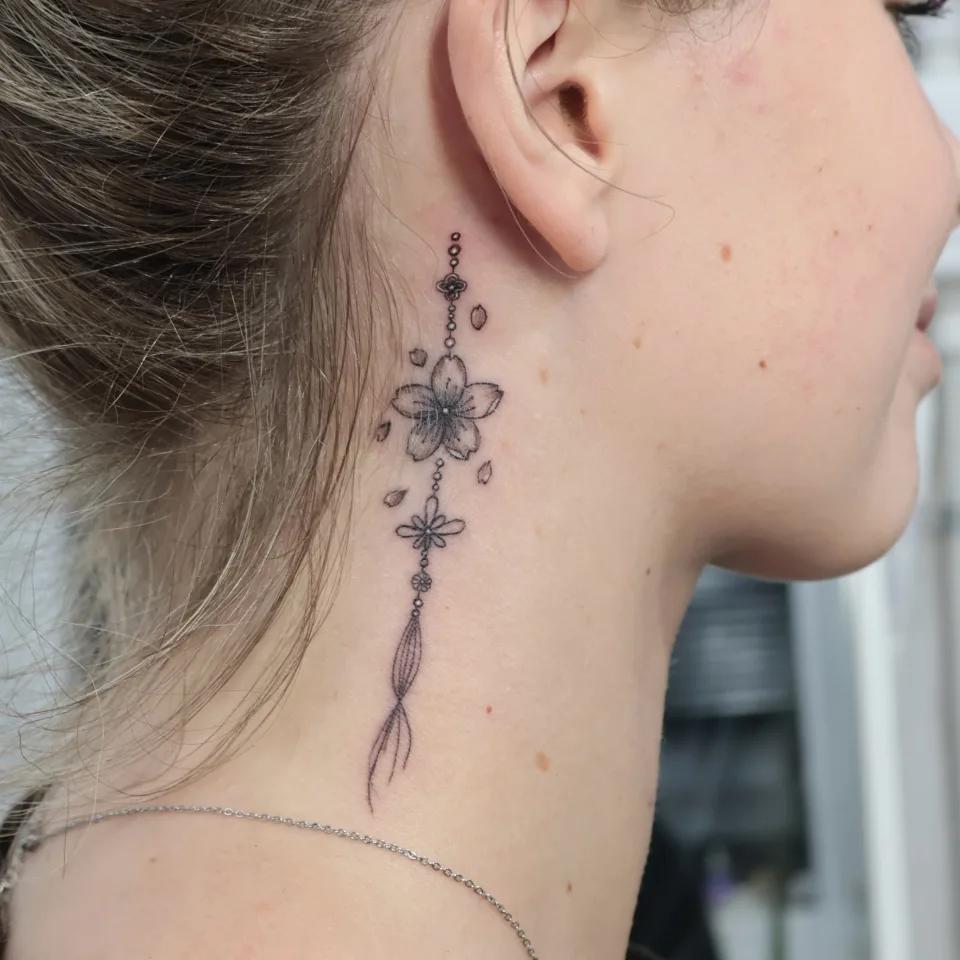
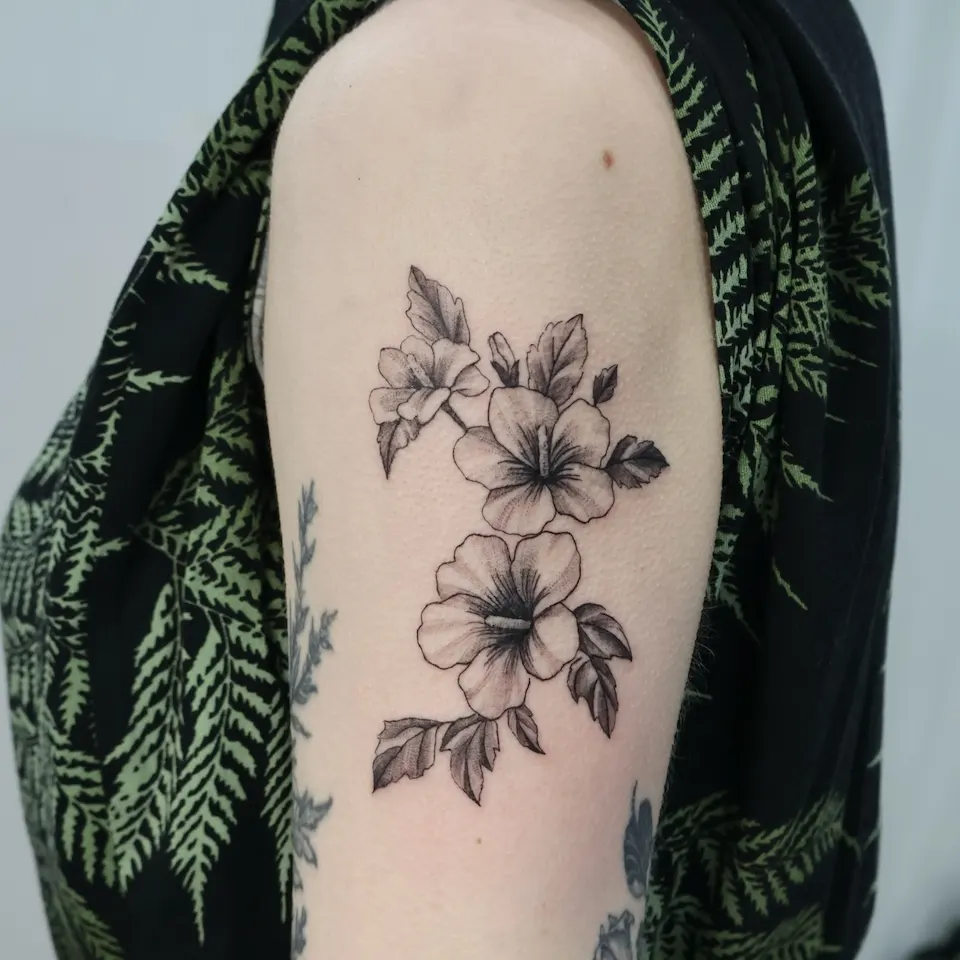
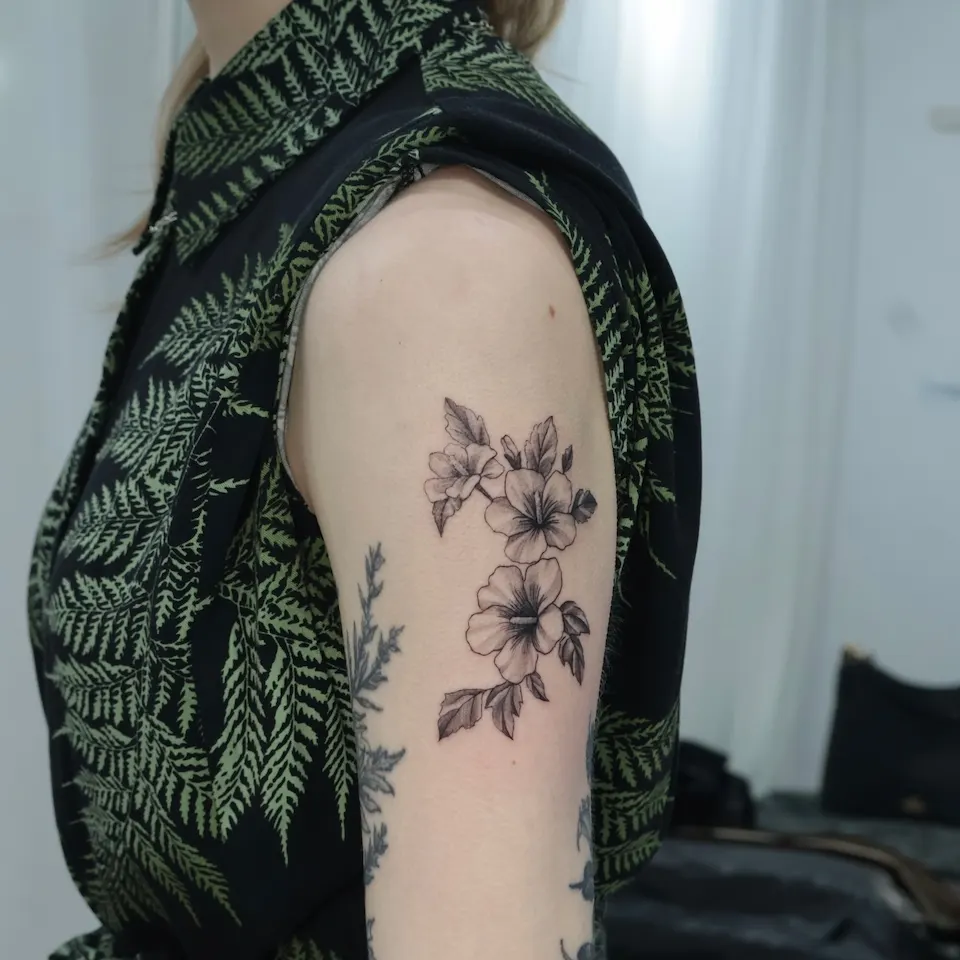
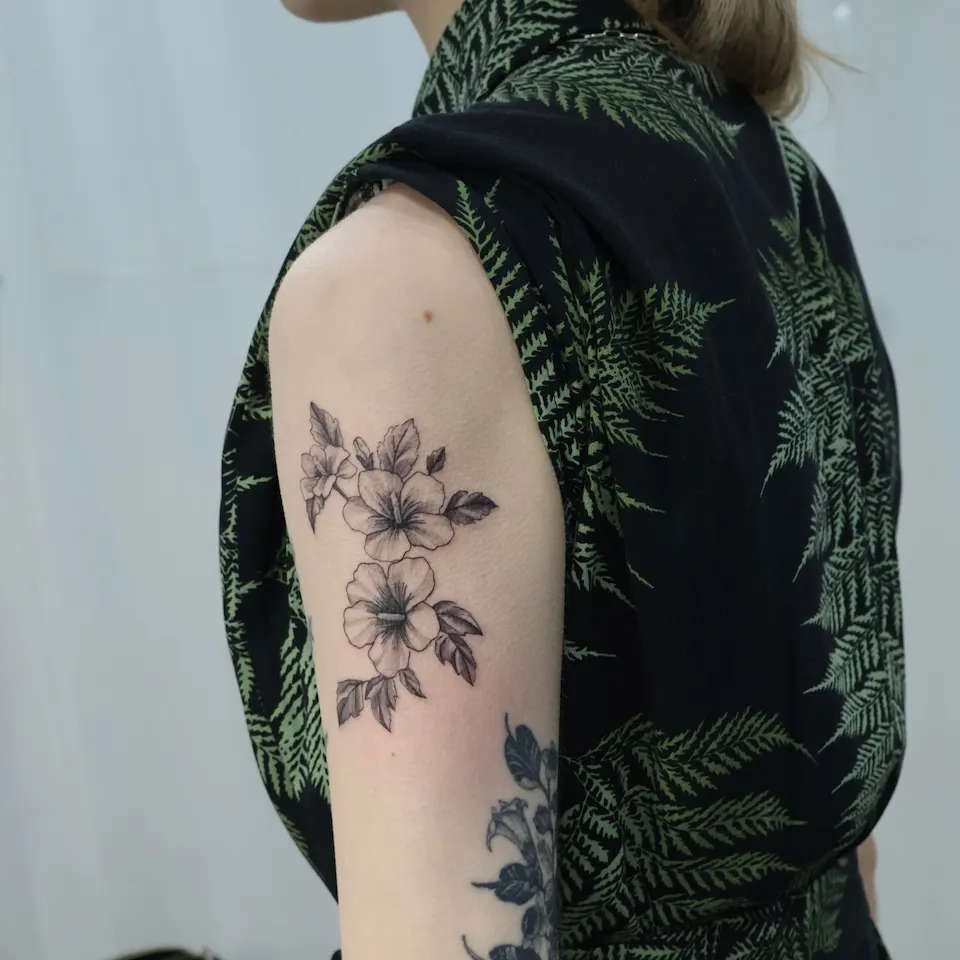
Line weight decides how a design reads from a distance and how much detail it can hold. In the photos, the norigae ornament is drawn in black line, while the tassel in the neck piece loosens into thin lines. The mugunghwa close-up combines black line with gray shading for two large flowers, leaves, and a bud. Different parts of one design can carry different line character.
A general way to think about it: bolder outlines make a shape easy to recognize, and thinner lines suit delicate parts such as tassel strands or small petals. If you like the look of a fine line tattoo, it helps to ask how much detail you want packed into the piece. In general, the finer and more numerous the details, the more room they need to stay readable.
Shading is another choice. The gray shading in the mugunghwa photo gives the flowers depth, while the pink tones in the norigae piece add warmth. When you compare references, notice whether you are drawn to the line itself, the shading, or the color, because that tells you what to protect in the final design.
How do you choose the right size and placement?
Size and placement should be chosen as a pair, because the shape of the body area limits the shape of the design. The photos show two clear examples. The norigae and the mugunghwa clusters sit on the upper arm, and the neck piece runs vertically along the side of the neck below the ear. Both designs are long and vertical, which suits a tassel that hangs and flowers that stack along a stem.
The mugunghwa tattoo is a good example of design following placement. In the photos, a small flower at the top, a large flower below, and leaves read as one stem running down the upper arm. In the side view, another tattoo continues below it, so neighboring work is also something to think about when you choose where a new piece goes.
Here is a simple way to compare the factors:
| Item | What to think about | Example from the photos |
|---|---|---|
| Line weight | Bold lines for clear shapes, thin lines for delicate parts | Black line ornament, thin tassel lines |
| Size | Enough room for the details you want to keep | Large flowers with leaves and a bud |
| Placement | Does the shape follow the body area? | Vertical designs on the upper arm and side of the neck |
| Neighboring tattoos | How the new piece sits next to existing work | Another tattoo continues below the mugunghwa |
If you are choosing a spot while visiting Seoul, the [Hongdae tattoo guide](/hongdae-tattoo) may help you plan the rest of your day around a consultation.
What do people often wonder about meaning and personal story?
Many people ask whether a tattoo design needs a deep reason behind it. It does not have to, but a clear idea makes decisions easier. When a motif has a meaning for you, such as a flower, an object, or a place, you can use that meaning to decide what to keep and what to simplify.
The cases in the caption show a few different starting points. One uses a national flower and a traditional ornament to speak about resilience and beauty. One is a family piece connected to a trip. One comes from a person who collects flowers from the places they travel to. The captions state these reasons; I will not add any that are not written there.
The same logic applies if you are thinking about a lettering tattoo. Begin with the message and the exact words, then think about how heavy the letters should look, how large they need to be to stay legible, and where the line of text can sit comfortably. Whether the subject is a flower or a phrase, meaning comes first and the visual choices follow from it.
Tattoo design checklist: what should you prepare before a consultation?
Before a consultation, it helps to bring a few clear answers instead of a finished drawing. You do not need to solve everything, but knowing your priorities lets the design discussion start in the right place. You can also get a feel for the studio's style first by [watching the tattoo films](/films).
Here is a short checklist to go through:
- [ ] The main motif or message, in one sentence
- [ ] Two or three reference images, and what you like about each (line, shading, color, or shape)
- [ ] The body area you are considering, and any existing tattoos nearby
- [ ] How bold or delicate you want the lines to look
- [ ] Whether the design should stay small and quiet or become a larger statement
- [ ] Any details you definitely want to keep, and any you are happy to simplify
The more specific your notes are, the easier it is to shape a custom design around your idea. If something is still undecided, that is fine. Say so, and talk it through together.
Let’s talk about a tattoo that feels like you
Bring reference photos and tell us your preferred motif, size and placement.
Can a traditional motif look modern in a tattoo design?
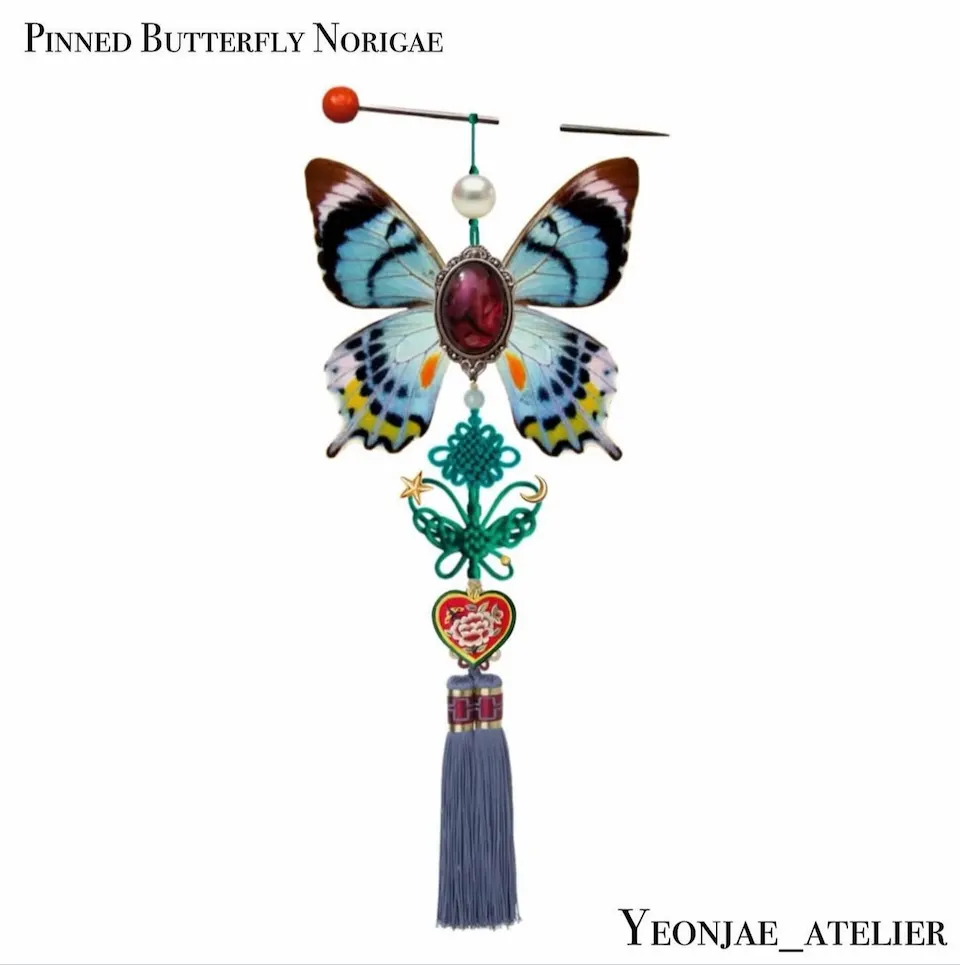
Yes, and the Pinned Butterfly Norigae is a good example from the same account. The caption describes it as a reinterpretation of the traditional norigae with a butterfly motif, inspired by Korean ornamental accessories. It combines a hairpin, decorative knots, tassels, and butterfly wings into a single piece, aiming to feel both traditional and contemporary with a slightly surreal and artistic mood.
The design image shows this clearly. A pin, blue butterfly wings, a red jewel, a teal knot, a heart pendant, and a gray-blue tassel connect vertically. This photo is a design image, not a photo of the tattooing itself, but it shows how separate elements can be joined into one long shape.
If you want to use a traditional motif, a few questions can guide you. Which parts of the original shape do you want to keep recognizable? What can be reinterpreted, through color, an added motif, or a change in mood? Keeping the recognizable silhouette while changing one element is one way to make an old motif feel personal and current.
Before you book
How do I pick a tattoo design if I can't decide between a few ideas?
Try writing one sentence about what each idea means to you, then compare line weight, size, and placement for each one. The idea that is easiest to describe and place is often the clearest choice. You can also bring all of them to a consultation and talk through the options.
Does a fine line tattoo need to be large?
Not necessarily, but the more detail you want, the more space it generally needs to stay readable. A simpler motif can work at a smaller size. Discuss the level of detail and the size together when you plan the design.
How should I think about tattoo placement?
Think about the shape of the body area and the shape of the design. Long, vertical designs, like a hanging tassel or a stem of flowers, suit areas that allow a vertical layout. Also consider nearby tattoos and how the new piece will sit beside them.
What should I bring to a tattoo design consultation?
Bring your main idea or message, a few reference images, the area of the body you are considering, and a sense of how bold or delicate you want the lines to look. Notes on what you like about each reference are especially useful.
Key facts
- Location
- 2F, G Studio, 136-11 Eoulmadang-ro, Mapo-gu, Seoul, South Korea
- Opening hours
- Mon–Sat 11:00–23:00 · Closed on Sundays
- Artist
- Yeonjae · China Academy of Art graduate · eighth year in Hongdae (as of 2026)
- Styles
- Fine line · Floral & botanical · Cover-up
- Consultation & booking
- Confirmed after consultation via Instagram DM, LINE or KakaoTalk
- Pricing & time
- Price and session length depend on the design, size and placement, and are explained during the consultation.
China Academy of Art graduate, in her eighth year as a tattoo artist in Hongdae · as of 2026
China Academy of Art is an art university founded in Hangzhou in 1928. Its long history of art education provides context for Yeonjae’s fine-art background. About the academy · official website ↗
Yeonjae Tattoo · Blog
This post brings together the work photographs, published descriptions and guidance for preparing an inquiry. See the artist profile above for the creator’s background.
Photo source: Original artwork & context ↗
Original Instagram caption
Based on the artist’s supplied work notes. Editorial text was prepared with AI assistance.