What actually determines tattoo price?
Hi, I'm Yeonjae, a tattoo artist in Hongdae, Seoul. The short answer is that tattoo price generally follows three things: the design (how much line work and detail it holds), the size, and the placement on the body. Together they decide how much time and care a piece needs, and that is why two tattoos that look similarly small in a photo can be quoted differently.
I won't put numbers in this article, because an honest figure only makes sense once the design and the exact spot are in front of us. What I can do is show you how these factors work in real pieces. Below I use two small handpoke-style tattoos as worked examples: a doodle grid inspired by a movie poster, and a line of sparkling music notes.
If you are searching for a tattoo price because you want to plan ahead, the most useful thing is to understand what a quote is made of. Once you can describe your idea in terms of design, size and placement, a tattoo consultation becomes much easier and the answer you get becomes much clearer.
How did the Perfect Days doodle tattoo come together?
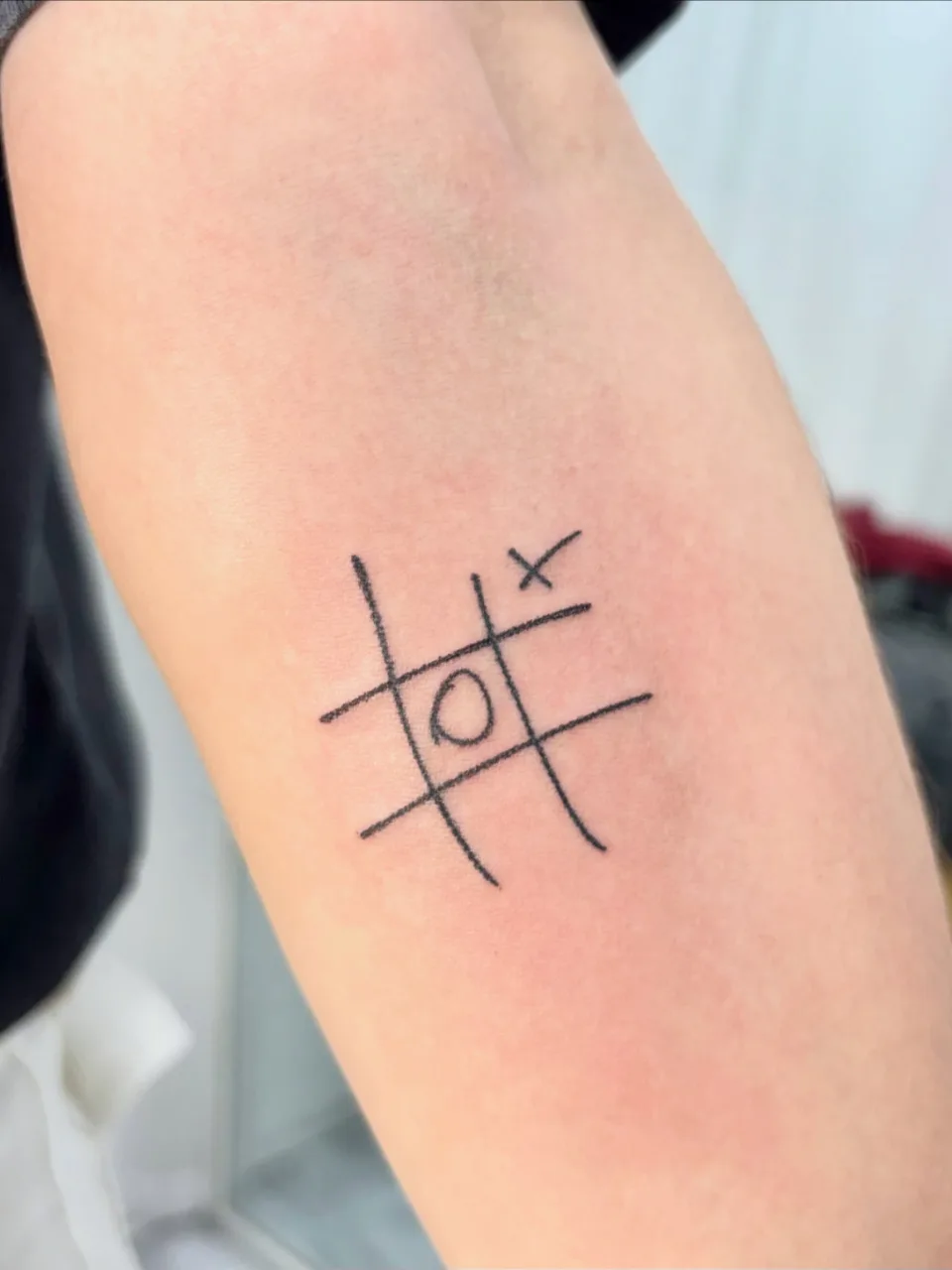
This piece was a handpoke-style doodle tattoo inspired by the movie poster of *Perfect Days*. The goal was to keep the rough, crayon-like texture and the natural, imperfect lines of the original design, rather than cleaning everything up into tidy, mechanical strokes. It is a small tattoo, and it has a really unique atmosphere.
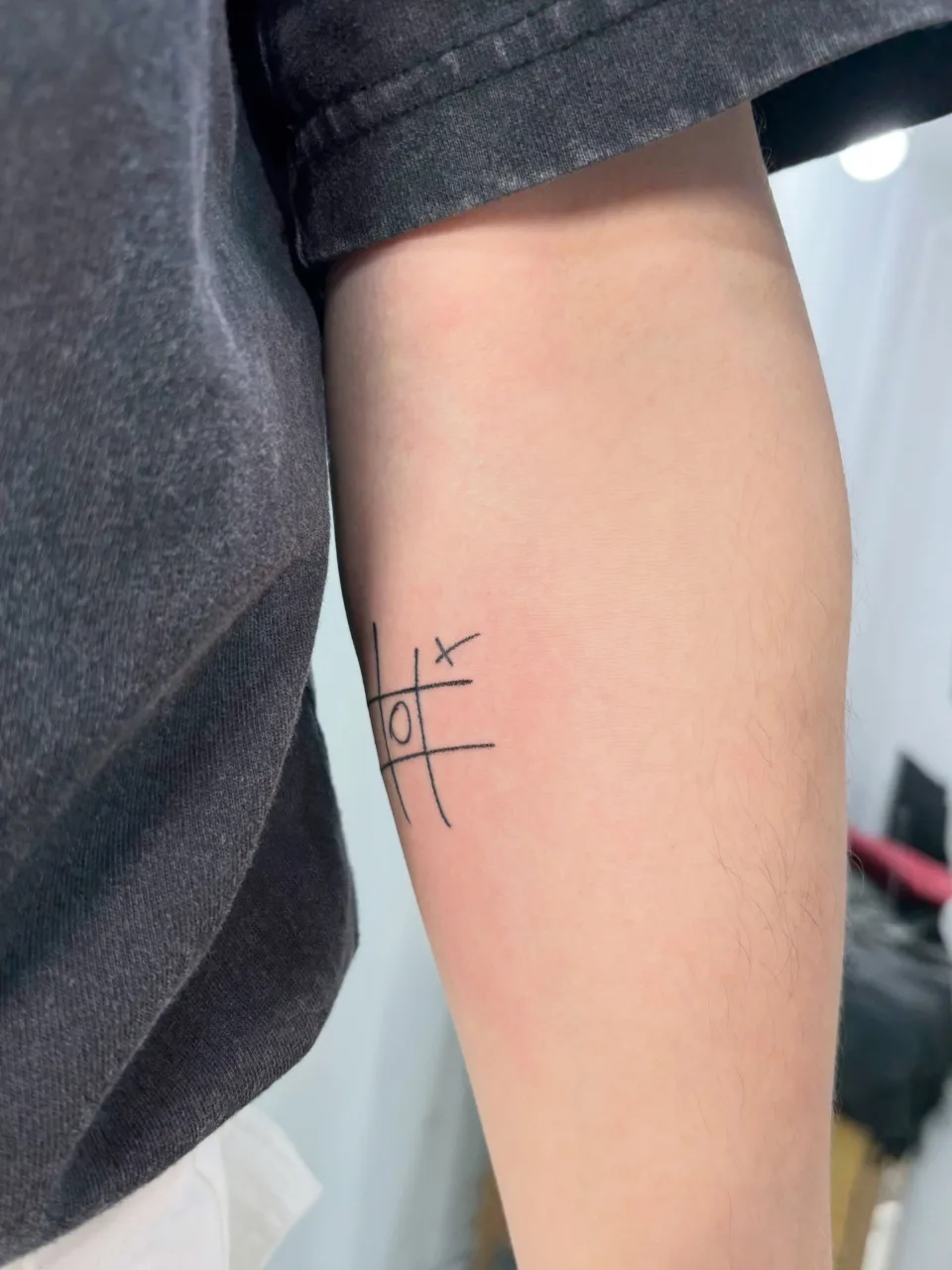
In the photos you can see how simple the design is. Two vertical lines and two horizontal lines cross in a # shape, with an O** in the center square and a small **x at the upper right. A far-away photo shows it on the side of the arm, just below a dark T-shirt sleeve, where the lines bend slightly with the curve of the arm.
This is a good example of why "small" and "simple" are not always the same thing for pricing. The design has very few elements, but its charm depends on lines that look hand-drawn and slightly uneven. Keeping that look takes attention to every line, and that kind of attention is part of what a quote reflects. If you want to see how a tattoo like this is made, you can [watch the tattoo films](/films).
How did the sparkling music note tattoo go?
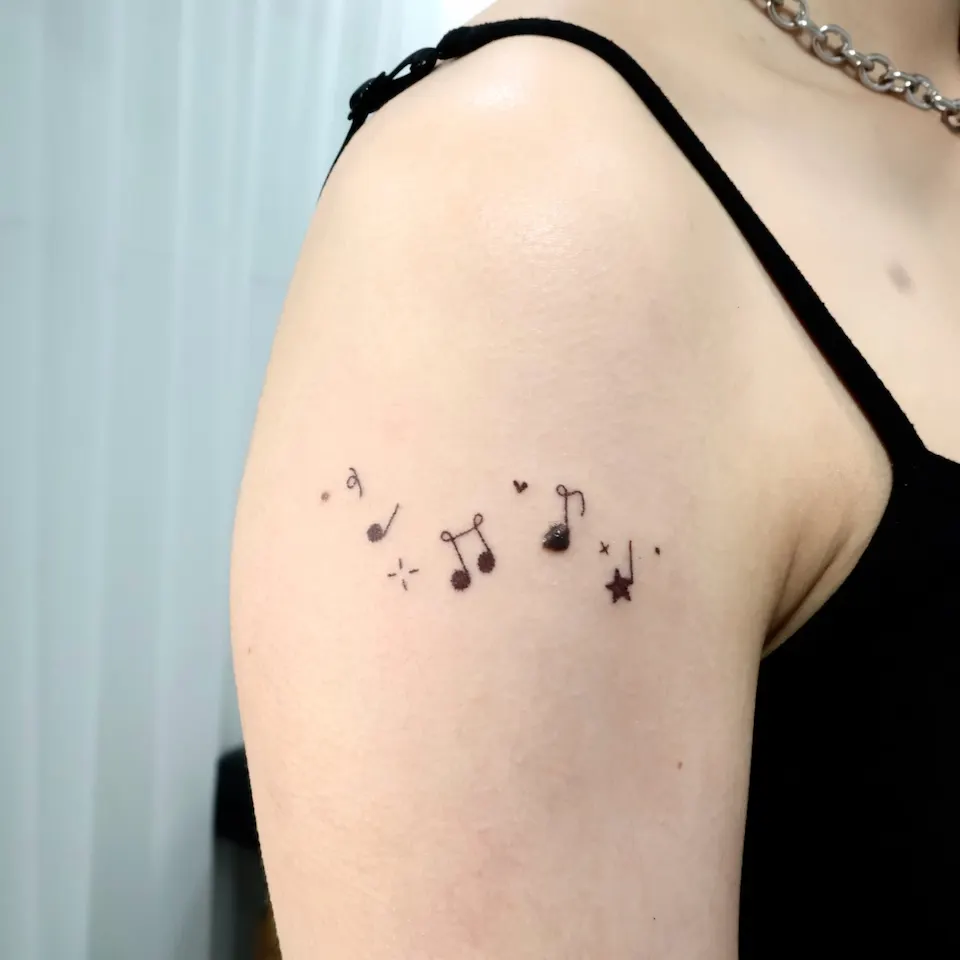
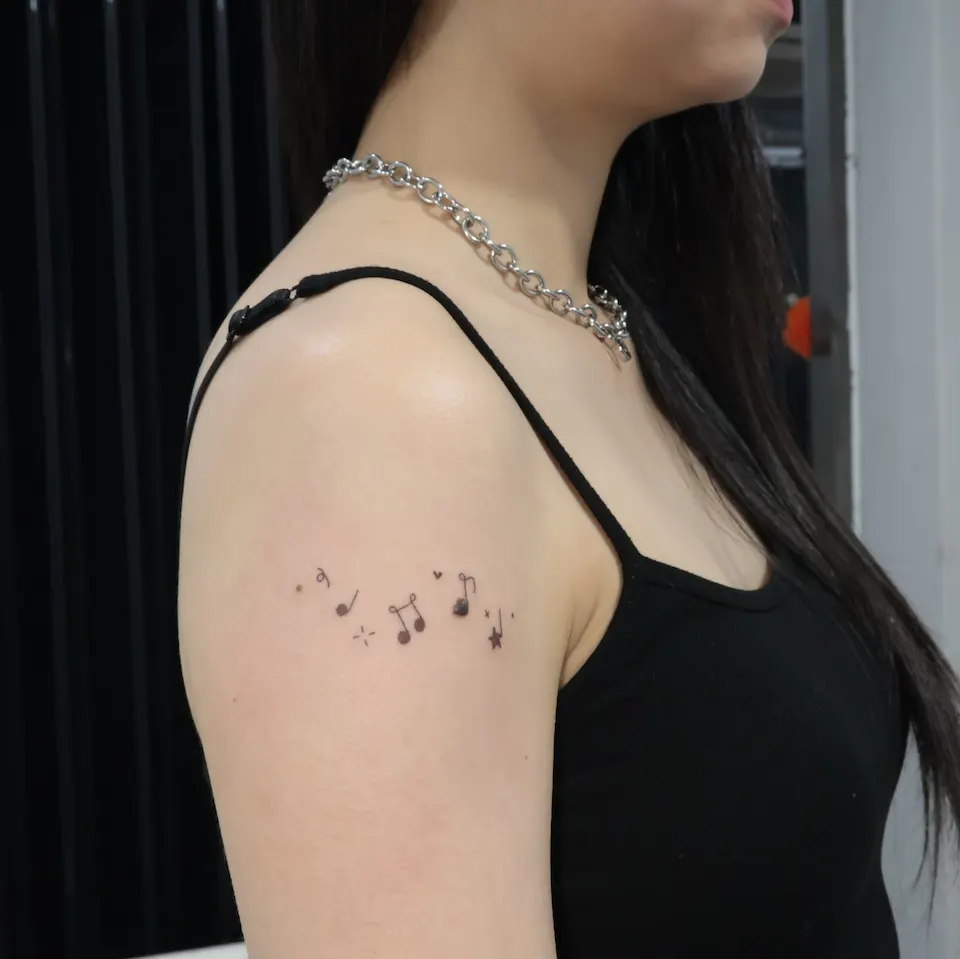
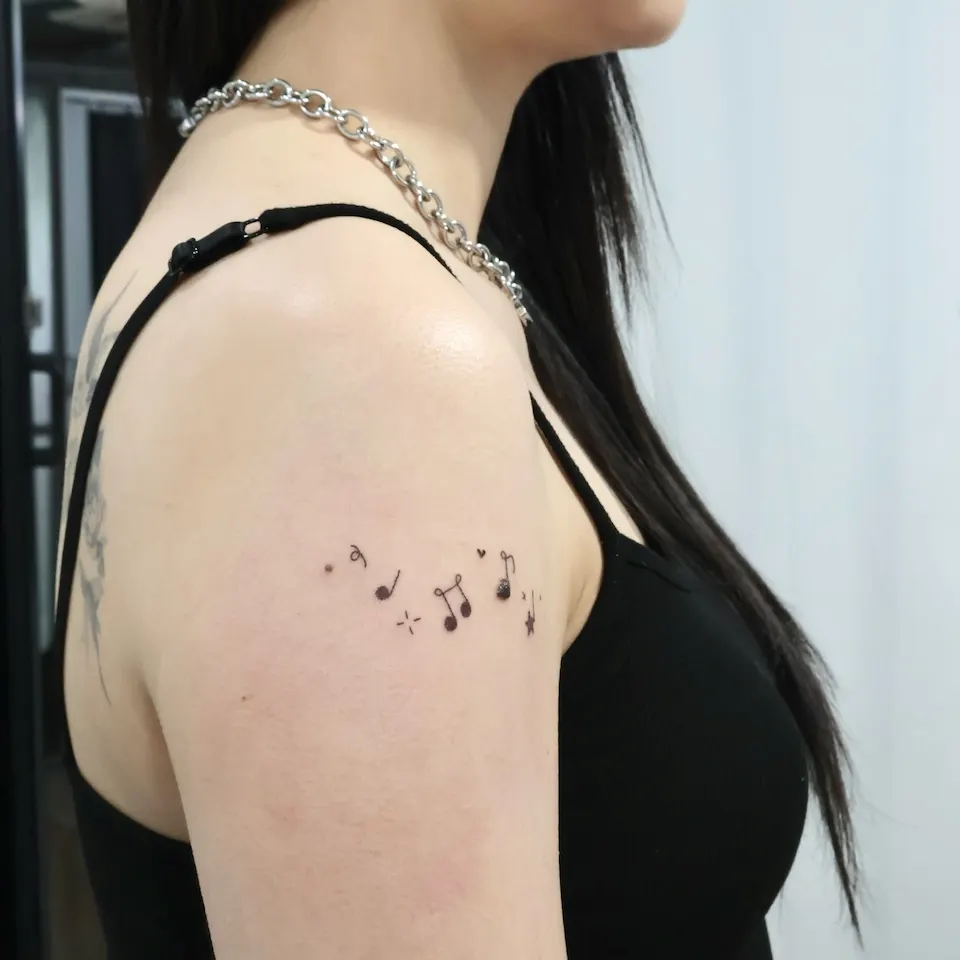
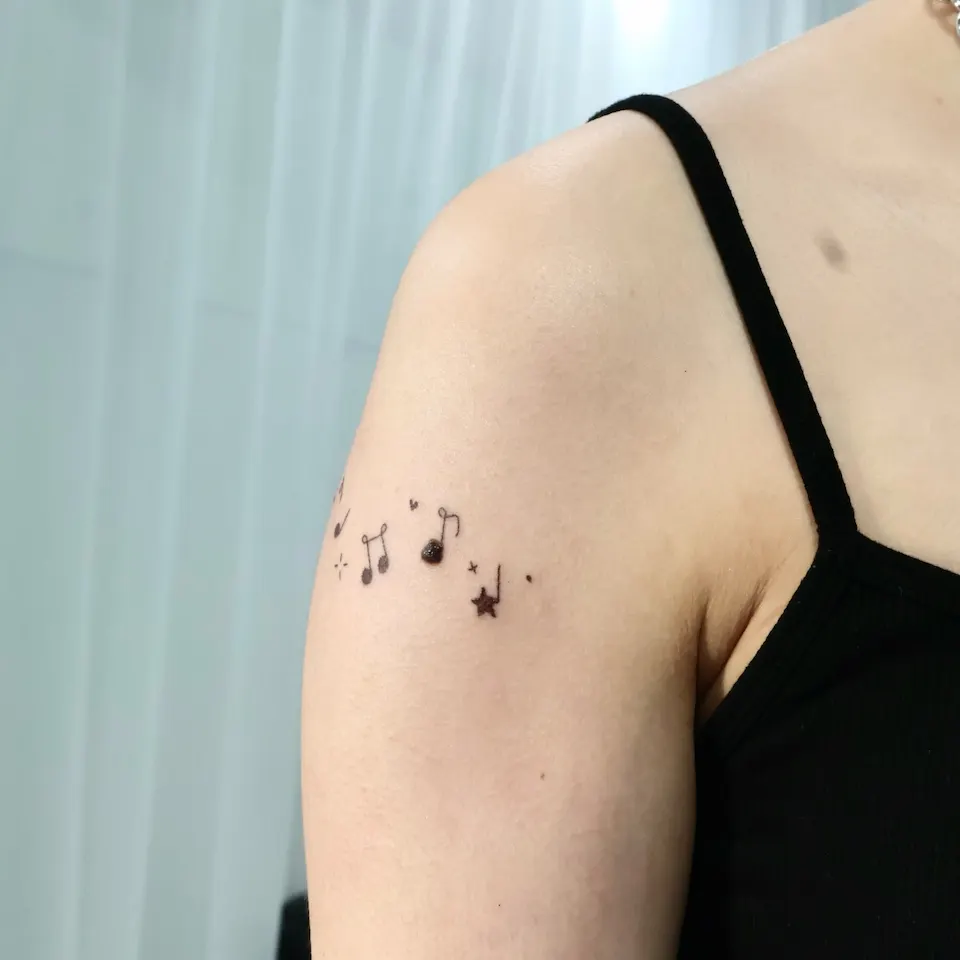
The second piece is a sparkling music note tattoo with a soft, hand-poked, crayon-like feel. It was placed around two spots that were already on the skin. According to the original note, those spots used to feel noticeable, but now they blend gently into the tattoo, and it has become easy to wear short sleeves again.
The photos show the design on the upper arm near the shoulder. Music notes, a small heart, stars and sparkling cross shapes are scattered in a horizontal line along the arm. In the wider photos you can judge how large the whole line is and where it sits in relation to the shoulder line, and in the close-up one end of the line runs off the edge of the frame beside a star and small dots.
This piece shows how a design can be built around something that is already there. Because the elements are scattered rather than packed into one block, the line can be adjusted in length and spacing. That flexibility is a good thing to keep in mind when you talk about size and about how many elements you really want.
How do design, size and placement change a tattoo quote?
Looking at the two pieces side by side makes the logic easier to see. The table below summarizes the general points, not a fixed rule or a number.
| Factor | What it means | Example from these pieces |
|---|---|---|
| Design | How many elements and how much detail or texture the artist must keep consistent | A few grid lines with an O and an x, versus a row of notes, a heart, stars and sparkles |
| Size | How much skin the design covers and how long it takes to complete | A small grid on the side of the arm versus a horizontal line across the upper arm |
| Placement | How easy the area is to work on and how the lines sit on a curved surface | The grid lines bend slightly with the arm; the notes run along the upper arm near the shoulder |
| Style | Whether the look depends on deliberate roughness or very clean lines | Crayon-like, naturally imperfect handpoke texture |
Notice that no single factor decides everything. A very small tattoo can still need careful work if the style relies on imperfect lines, and a longer arrangement of small elements can feel light if the spacing is open. This is why a quote is usually given after seeing both the design and the spot, not from a size alone.
It also helps to remember that the same design can be reshaped. Fewer elements, a shorter line or a different position will change the scope of the piece, and a good conversation at the consultation can show you which changes affect the quote and which do not.
What do people often wonder about tattoo quotes?
Many people ask whether a small tattoo should automatically be simple to quote. In general, size is only one part of the picture. The amount of detail, the placement and the style all matter, so it is worth describing your idea fully instead of just saying "something small."
Another common question is whether a reference image is enough. A reference helps a lot, especially for a style like a doodle or a crayon-like texture, because words such as "rough" or "soft" mean different things to different people. Bringing a poster, a drawing or a few photos of tattoos you like lets the artist see what you actually mean. You can find more notes on how pieces like these are planned in the [work notes](/journal).
People also wonder whether placing a tattoo near something already on the skin changes the approach. From the music note piece, what I can say is that the design was arranged around two existing spots and that the result blended them in. Whether a similar idea suits you depends on your own skin and design, so it is something to bring up openly at the consultation.
Finally, many people ask if they should decide everything before asking about price. You do not need a finished design, but a rough idea of the theme, the area and the approximate size makes the first conversation far more useful.
What is on the checklist before asking for a tattoo consultation?
A little preparation makes the consultation faster and the quote clearer. Before you get in touch, try to gather the following. If you are in Seoul and want to know more about the area, the [Hongdae tattoo guide](/hongdae-tattoo) may also help.
- [ ] A reference image or a few words describing the mood (for example rough, soft, crayon-like, clean)
- [ ] The area of the body you are considering, and a photo of it if you can
- [ ] A rough idea of the size you imagine, such as small, palm-width or a longer line
- [ ] The number of elements you want, such as one symbol or several small ones
- [ ] Anything already on the skin that you would like the design to work around
- [ ] Your own limits and priorities, so you can talk through trade-offs
- [ ] Questions you want to ask about the process and aftercare
You do not have to complete every item. Even three or four of these will give a clear starting point, and the artist can help fill in the rest.
The point of the list is not to push you toward a decision. It is to make sure the quote you receive is based on a real design and a real spot, so that what you hear is useful and not just a guess.
Let’s talk about a tattoo that feels like you
Bring reference photos and tell us your preferred motif, size and placement.
How can you compare quotes fairly?
When you compare quotes, compare the same thing. If one quote is for a small grid with two marks and another is for a long line of scattered elements, they describe different amounts of work, so the numbers are not directly comparable.
It also helps to ask what the quote includes and what would change it. For example, would adding another star or extending the line change the scope? Would moving the design to a different part of the arm change anything? Understanding these questions gives you control over the plan.
Finally, think about the style that you want to live with. A handpoke-style piece with a crayon-like texture is a particular choice, and the look comes from consistent, natural imperfection. Choosing an artist whose work shows that texture is more important than chasing a single number. Take your time, ask questions, and decide when the design feels right for you.
Before you book
Can a tattoo price be estimated from size alone?
Usually not. Size is one factor, but the amount of detail, the placement and the style also affect how much time and care a piece needs, so a quote is best given after seeing the design and the area.
Does a simple design always mean a simple quote?
Not necessarily. A design with few lines can still depend on a particular texture, such as natural, imperfect handpoke lines, and keeping that look consistent takes attention.
Do I need a finished design before a tattoo consultation?
No. A rough idea of the theme, the area and the approximate size is enough to start, and a reference image or a few mood words will make the conversation more useful.
Can I change my design to adjust the quote?
You can discuss it. Changing the number of elements, the length of a line or the position may change the scope of the work, and the artist can explain which changes matter.
Why does placement matter for a tattoo quote?
The area affects how the lines sit and how easy it is to work on. In the grid tattoo shown here, for example, the lines bend slightly with the curve of the arm.
Key facts
- Location
- 2F, G Studio, 136-11 Eoulmadang-ro, Mapo-gu, Seoul, South Korea
- Opening hours
- Mon–Sat 11:00–23:00 · Closed on Sundays
- Artist
- Yeonjae · China Academy of Art graduate · eighth year in Hongdae (as of 2026)
- Styles
- Fine line · Floral & botanical · Cover-up
- Consultation & booking
- Confirmed after consultation via Instagram DM, LINE or KakaoTalk
- Pricing & time
- Price and session length depend on the design, size and placement, and are explained during the consultation.
China Academy of Art graduate, in her eighth year as a tattoo artist in Hongdae · as of 2026
China Academy of Art is an art university founded in Hangzhou in 1928. Its long history of art education provides context for Yeonjae’s fine-art background. About the academy · official website ↗
Yeonjae Tattoo · Blog
This post brings together the work photographs, published descriptions and guidance for preparing an inquiry. See the artist profile above for the creator’s background.
Photo source: Original artwork & context ↗
Original Instagram caption
Based on the artist’s supplied work notes. Editorial text was prepared with AI assistance.